
Financing THC vape inventory in Canada typically ranges from $10,000 to $500,000, with interest rates between 8% and 24% annually depending on your business credit profile, licensing status, and chosen lender. Licensed cannabis retailers and wholesalers can access specialized inventory financing, purchase order funding, or traditional business lines of credit, though approval standards remain stricter than most industries due to federal banking regulations and the relatively young legal market.
Key Takeaway: Your financing cost hinges on three main factors: your provincial cannabis license standing, existing business credit history, and whether you opt for these THCP vapes from traditional bank products or alternative lenders who specialize in the cannabis sector. Rates drop significantly once you’ve demonstrated 12 months of compliant sales data.
The price you’ll pay for capital depends heavily on your track record. Established retailers with clean compliance records and audited financials qualify for lower-tier rates, while newer operators or those without strong revenue history face premium pricing. Product type matters too, as different brands may carry different margin profiles that lenders evaluate when setting terms. Understanding the full cost structure, from origination fees to prepayment penalties, helps you compare offers accurately and choose the solution that fits your cash flow cycle. Whether you bootstrap with personal savings or pursue professional financing shapes not just your immediate expenses but your long-term growth capacity in Canada’s competitive cannabis market.
Financing Costs by Loan Amount and Term
Financing cannabis vape inventory in Canada ranges from a few thousand dollars for boutique retailers stocking a dozen cartridges to multi-million-dollar credit lines for large wholesalers supplying entire provincial markets. The total cost depends on how much you borrow, how quickly you repay, and which repayment structure you choose.
For small retailers ordering initial stock, financing $5,000 to $25,000 covers roughly 100 to 500 THCp cartridges or disposables at wholesale rates. A monthly repayment plan over six months keeps administrative overhead low, while daily or weekly structures accelerate payoff but require more frequent transactions. Mid-sized operations moving $50,000 to $250,000 in inventory quarterly often prefer bi-weekly repayments that align with typical retail cash flow cycles, reducing the strain on working capital between restocking periods.
| Financing Amount | Typical Use Case | Repayment Frequency Options | Cost Considerations |
|---|---|---|---|
| $5,000, $25,000 | Small retailer initial stock | Weekly, Bi-weekly, Monthly | Higher rate per dollar, shorter terms reduce total interest |
| $50,000, $250,000 | Mid-sized quarterly restock | Bi-weekly, Monthly | Moderate rates, cash flow alignment critical |
| $500,000, $2 million | Regional distributor inventory | Monthly, Quarterly draws | Volume discounts on rate, longer terms increase total cost |
| $2 million, $5 million+ | Large wholesale operations | Monthly, Revolving credit | Lowest rates, requires strong credit and licensing history |
Wholesale distributors financing $500,000 to $2 million gain access to volume pricing from licensed producers but face longer repayment horizons that compound interest charges. A $1 million line amortized over 24 months costs substantially more in total than the same amount repaid in 12 months, even if the monthly payment is easier to manage. Daily repayment structures, common in short-term cannabis financing, work for retailers with consistent foot traffic but create administrative burden and can inflate total cost if the term stretches beyond a few months.
Large operations exceeding $2 million typically use revolving credit facilities that function like a business credit card for inventory purchases. You draw funds as needed, repay from sales revenue, and repeat the cycle. This flexibility suits businesses with fluctuating demand across product lines, THCp cartridges, disposables, concentrates, but requires disciplined cash management to avoid carrying a high balance that accrues interest daily. The lowest per-dollar financing costs go to established businesses with federal or provincial licensing, strong sales history, and relationships with specialized cannabis lenders who understand inventory turnover in this market.
What Goes Into Your Total Financing Cost

When you’re financing THC vape inventory in Canada, understanding the full cost picture means looking beyond the sticker price. Several distinct components combine to determine what you’ll actually pay to fund your cannabis product purchases, and each one plays a specific role in your total expense.
Principal Amount
This is the base funding you receive, the actual dollar value of your THC vape cartridges or disposables order. If you’re purchasing $10,000 worth of THCp concentrate cartridges from a licensed producer, that $10,000 represents your principal. This amount forms the foundation for all other cost calculations and reflects the inventory value you’re bringing into your business.
Interest Charges
Interest represents the lender’s cost of providing capital and typically appears as an annual percentage rate (APR) or a factor rate. For cannabis businesses, rates vary based on your licensing status, credit profile, and relationship with the lender. A $10,000 loan at 15% APR over 12 months costs roughly $1,500 in interest, though the exact figure depends on your repayment schedule and compounding method.
Administrative and Processing Fees
Lenders often charge fees to cover the operational costs of underwriting and servicing your loan. These might include:
- Application fees charged upfront to process your financing request
- Origination fees (typically 1-5% of principal) deducted when funds are disbursed
- Monthly servicing fees for account maintenance and payment processing
- Late payment penalties if you miss scheduled installments
- Early repayment fees in some agreements, though many cannabis-focused lenders waive these
Partnership Benefits
Some financial institutions offering cannabis financing maintain strategic relationships with licensed producers and provincial retail networks. These partnerships can reduce your costs through preferential rates, waived fees, or flexible terms designed specifically for the cannabis industry’s unique cash flow patterns. If your supplier has an established financing partnership, you might access better terms than going directly to a general lender who lacks cannabis market expertise.
The total financing cost equals your principal plus all interest and fees minus any partnership discounts. A clear breakdown from your lender before you commit helps you compare options accurately and choose the financing structure that best supports your cannabis retail or distribution operation.
Factors That Affect Your Financing Rate
Business Type and Licensing Status
Your licensing status directly shapes what financing you can access and what you’ll pay for it. Federally-licensed producers typically qualify for the most competitive rates because lenders view them as lower-risk: you’re already vetted under the Cannabis Act’s strict production standards, which signals operational legitimacy and compliance expertise. Provincially-licensed retailers in regions with regulated frameworks come next, lenders know you operate within a legal structure, though rates may be slightly higher than for producers since retail carries different inventory turnover patterns.
Operating in a province without a regulated retail framework presents the biggest challenge. If you purchase exclusively from federally-licensed producers as an online customer rather than a brick-and-mortar retailer, traditional lenders often decline to finance inventory at all, viewing the model as higher-risk. When financing is available, expect substantially higher interest charges and stricter repayment terms.
Regardless of your license type, lenders scrutinize the personal vs business credit distinction. Demonstrating strong business financials, not just personal guarantees, helps secure better terms. Take steps to build business credit separately from your personal profile, particularly if you’re a newer retailer. Federal producers leveraging established trade credit with suppliers gain additional negotiating power with fintech partners.
Product Type and Inventory Value
The type of THC vape product you’re financing directly affects both your approval odds and the cost of capital. Lenders treat high-concentration cartridges differently than disposable pens because the inventory value per unit, regulatory risk, and turnover velocity all shift. A $5,000 order of disposable vapes carries different underwriting criteria than the same dollar amount in premium live-resin cartridges, even though both fall under the concentrate category authorized on October 17, 2019.
Concentrates command higher per-gram values than dried flower, which means your loan-to-inventory ratio changes. A cartridge retailing for $40 to $60 represents denser capital than a $12 pre-roll, so lenders often cap advance rates at 60 to 70 percent of wholesale cost for vape products rather than the 80 percent you might see on flower. If you’re financing disposables with faster turnover, some lenders offer slightly better terms because the inventory converts to cash within weeks. Slower-moving, high-potency THCp cartridges might carry a premium of 1 to 2 percentage points on interest rates due to perceived shelf-life risk.
Inventory mix matters, too. Financing a diverse order of cartridges, disposables, and accessories spreads risk and can improve your rate. A single-SKU purchase of 500 identical cartridges signals concentration risk, which lenders price accordingly. Document your sales velocity and product rotation when applying; proving you move vape inventory in 30 days rather than 90 strengthens your case for lower rates and higher advance percentages.
Self-Funding vs. Professional Financing for Cannabis Inventory
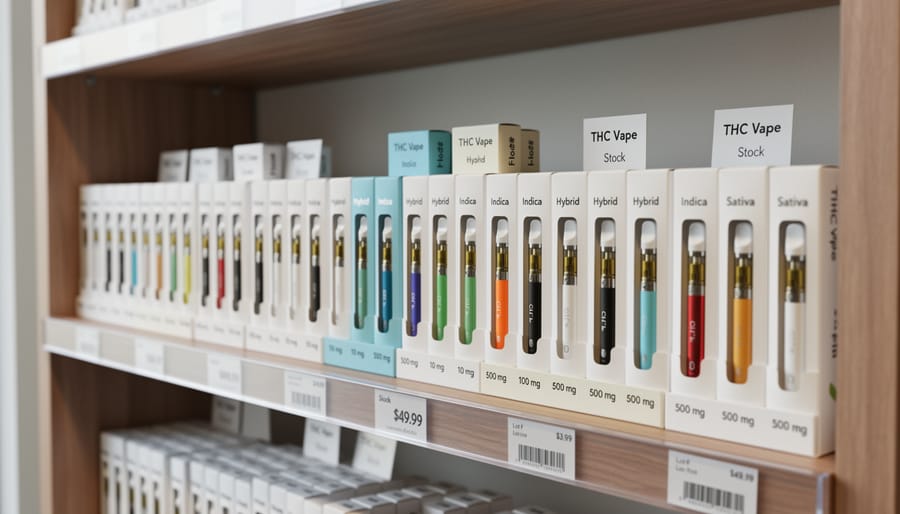
Paying cash upfront for THC vape inventory gives you full ownership and zero interest charges, but it ties up capital that could fuel expansion or buffer against market shifts. Professional financing spreads your payments over time, letting you preserve working capital while still stocking high-demand THCp cartridges and disposables, products that became legal for sale in October 2019 and now represent significant revenue opportunities for licensed retailers.
Self-funding makes sense when you have substantial reserves and want complete control over your inventory decisions without monthly obligations. You avoid interest costs entirely and eliminate the need to qualify for credit products. However, committing large cash amounts to inventory leaves less room to manage cash flow during seasonal dips or unexpected expenses like equipment repairs or regulatory compliance upgrades. If a popular vape concentrate sells slower than projected, your capital stays locked in unsold stock rather than available for marketing or diversification.
Professional financing shifts that risk profile. You pay interest and possibly administrative fees, but you retain liquidity to respond quickly when new product lines emerge or wholesale pricing drops. A licensed producer offering bulk discounts on THCp disposables becomes accessible even if your cash reserves are modest. Financing also smooths revenue fluctuations: instead of draining your account for a quarterly restock, you spread payments across weeks or months as sales generate income.
Pros
- Self-funding eliminates interest charges and keeps full control over inventory decisions.
- Financing preserves working capital for marketing, compliance, and unexpected costs.
- Financing enables bulk purchases and wholesale discounts without depleting reserves.
- Financing smooths cash flow by aligning payments with sales cycles.
Cons
- Self-funding locks capital in inventory, reducing flexibility during slow periods.
- Financing adds interest and fees that increase total cost of goods.
- Self-funding limits growth if cash reserves can’t support scaling or new product lines.
- Financing requires credit approval and compliance documentation, adding administrative time.
Cannabis retailers just starting out often benefit from financing because initial licensing costs and store buildouts already strain budgets. Established distributors with steady revenue and surplus cash may prefer self-funding for routine restocks while reserving credit lines for expansion moves like entering new provincial markets or adding exclusive vape brands. Balancing both approaches, cash for baseline inventory, financing for growth opportunities, gives you the flexibility to capitalize on Canada’s evolving cannabis landscape without overextending either your credit or your reserves.
Who Qualifies for THC Vape Product Financing
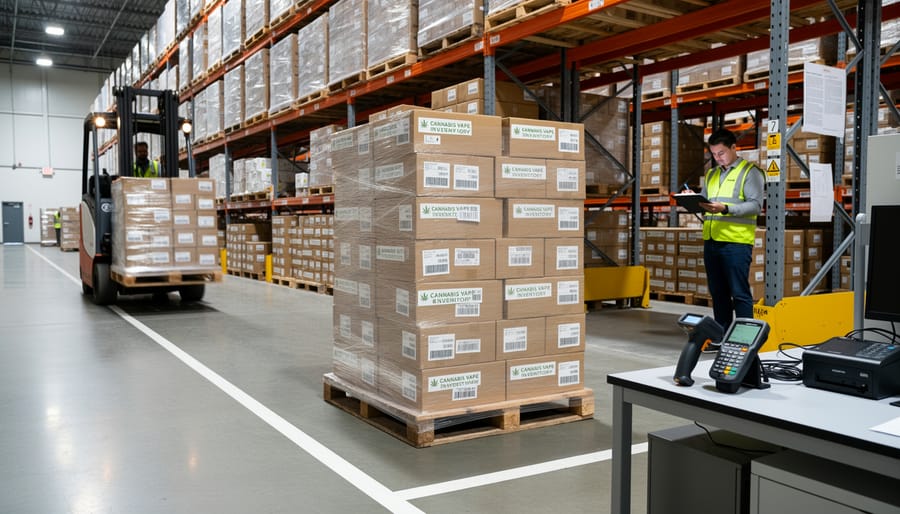
Getting approved for THC vape product financing in Canada starts with meeting federal and provincial legal requirements. The Cannabis Act sets the baseline: you must be at least 18 years old, though some provinces raise that minimum to 19. Beyond age, lenders want to see that you’re operating within the regulated framework, either as a provincially-licensed retailer in provinces with established retail systems, or as a federally-licensed producer or distributor.
Your licensing status matters more than almost anything else. Retailers in regulated provinces need valid provincial permits, while those in territories without retail frameworks must demonstrate they’re purchasing from federally-licensed sources. Producers and wholesalers need their federal production or processing licenses current and in good standing. Lenders won’t touch unlicensed operations, full stop.
The documentation typically required includes:
- Valid federal or provincial cannabis business license
- Business registration and incorporation documents
- Recent financial statements or tax returns
- Proof of compliance with provincial cannabis regulations
- Details of inventory to be financed, including supplier information
- Personal identification for business owners or signing officers
Strategic partnerships between specialized fintech lenders and cannabis industry stakeholders have made access easier. These lenders understand that cannabis businesses face unique banking challenges and have built systems to serve licensed operators. They can move faster than traditional banks because they’ve already navigated the regulatory complexity.
Your credit history still counts, but specialized cannabis lenders weigh your licensing and compliance record heavily. They know the industry’s nuances, seasonal demand cycles, provincial supply differences, the distinction between cartridges and disposables, and structure financing accordingly. If you’re licensed, compliant, and can document your business fundamentals, you have a realistic path to approval even if your credit isn’t perfect.
How to Secure the Best Financing Terms

Getting favorable terms on cannabis inventory financing requires preparation and strategy. Lenders specializing in the cannabis sector understand your unique cash flow patterns and regulatory constraints, so targeting the right partners makes a tangible difference in what you’ll pay.
- Build a solid financial foundation before you apply. Open a dedicated business bank account that clearly separates personal and business transactions, maintain clean books showing consistent revenue, and keep your licensing documentation current with both federal and provincial authorities.
- Time your application strategically around your order cycles. Apply when you can demonstrate predictable sales patterns rather than during slow periods, and align financing requests with bulk purchases where volume discounts from producers improve your margins.
- Leverage existing industry relationships. If you’ve established a track record with licensed producers or distributors, ask them about preferred financing partners or referral programs that can streamline approval and potentially reduce rates.
- Compare multiple specialized lenders rather than settling for the first offer. Fintech companies focusing on cannabis retail often provide more flexible terms than traditional banks, with structures that match the realities of vape product turnover.
- Demonstrate inventory management competence by showing you understand product-specific factors. Highlight your experience with concentrates and vape cartridges, your compliance history, and your plans for moving inventory before financing costs erode margins.
Strong applications include clear projections showing how the financed inventory will generate revenue to cover repayment. If you’re expanding into new product lines like THCp disposables, explain your research and market positioning. Lenders value borrowers who understand both the financial mechanics and the regulatory landscape, so presenting yourself as a knowledgeable operator rather than just another applicant seeking capital can shift negotiations in your favor.
Common Questions About THC Vape Product Financing
How long does it take to get approved for THC vape product financing?
Approval timelines vary depending on your business’s licensing status and documentation readiness, but specialized cannabis lenders can often process applications within 24 to 72 hours. Having your provincial retail license or federal production license readily available speeds up the process significantly.
Do financing costs differ between provinces?
Yes, provincial regulations affect both financing availability and cost structures. Provinces with regulated retail frameworks (where adults 18+ can purchase from licensed retailers) typically offer more financing options than those without established retail systems, and lenders factor in provincial compliance requirements when setting rates.
Can I finance online purchases from federally-licensed producers?
Absolutely. Whether you’re ordering vape cartridges through a licensed producer’s online platform or purchasing inventory for your retail location, financing options are available for both channels. Your licensing status matters more than whether the transaction happens online or in person.
What happens if I need to finance both THC vape products and other cannabis inventory?
Most cannabis-focused lenders structure financing to cover your full inventory needs, including dried cannabis, fresh cannabis, concentrates, edible products, and vape cartridges together. Since concentrates and vape products became legal for sale in October 2019, lenders have adapted their programs to accommodate mixed inventory financing under a single agreement.
Understanding these practical financing considerations helps you plan inventory purchases more effectively. The cannabis industry’s unique regulatory environment means standard business lending practices don’t always apply directly, which is why working with lenders who understand the Cannabis Act framework makes a measurable difference in both approval speed and cost.
Timing your financing application to align with product release cycles or seasonal demand shifts can also improve your terms. Lenders view businesses with predictable order patterns and strong compliance records more favorably, translating to better rates and higher credit limits over time.
DIY vs Hiring a Pro
For cannabis retailers managing THC vape inventory, you face two approaches: handling financing directly with lenders or engaging a financial advisor who specializes in cannabis business funding.
Self-managing costs nothing beyond your time. You research lenders, compare terms, prepare documentation, and negotiate directly. This works if you understand financial products, have strong credit, and can dedicate hours to vetting options. The risk is higher if you misread terms or overlook fees, but you maintain full control and build direct relationships with financial institutions.
Hiring a cannabis finance specialist typically costs 1% to 3% of the funded amount, or a flat advisory fee. They bring industry connections, know which lenders work with THCp vape inventory under the Cannabis Act, and can secure better rates through established partnerships. A good advisor saves time and often negotiates terms that offset their fee. The trade-off is reduced control and added cost.
Choose self-management if you have financial literacy and time. Hire help if you need fast funding, lack lending experience, or want access to specialized cannabis financing networks that most retailers cannot reach independently.
Financing THC vape inventory in Canada doesn’t have to strain your cash flow or slow your growth. The total cost depends on your loan amount, repayment term, business profile, and licensing status, all within the framework of the Cannabis Act. Whether you’re a provincially-licensed retailer ordering THCp cartridges or a federally-licensed producer managing large concentrate shipments, understanding these variables helps you make smarter funding decisions.
Personalized financial solutions give cannabis businesses the flexibility to stock inventory, meet demand, and expand without tying up working capital. Strategic partnerships with lenders who understand the cannabis sector can unlock better terms and smoother approval processes. If you’re unsure where to start, reach out to a knowledgeable financing team that specializes in cannabis retail and wholesale. The right financing partner aligns with your business cycle, compliance requirements, and growth plans, making it easier to keep your shelves stocked and your customers satisfied.